Fix Prenatal Care
- Identify risk earlier and remove barriers to prenatal visits
- Use virtual care to reach women far from providers
- Train more community health workers, doulas, and midwives
Right now it isn't. Together, we can change that.
Join the Momtourage →
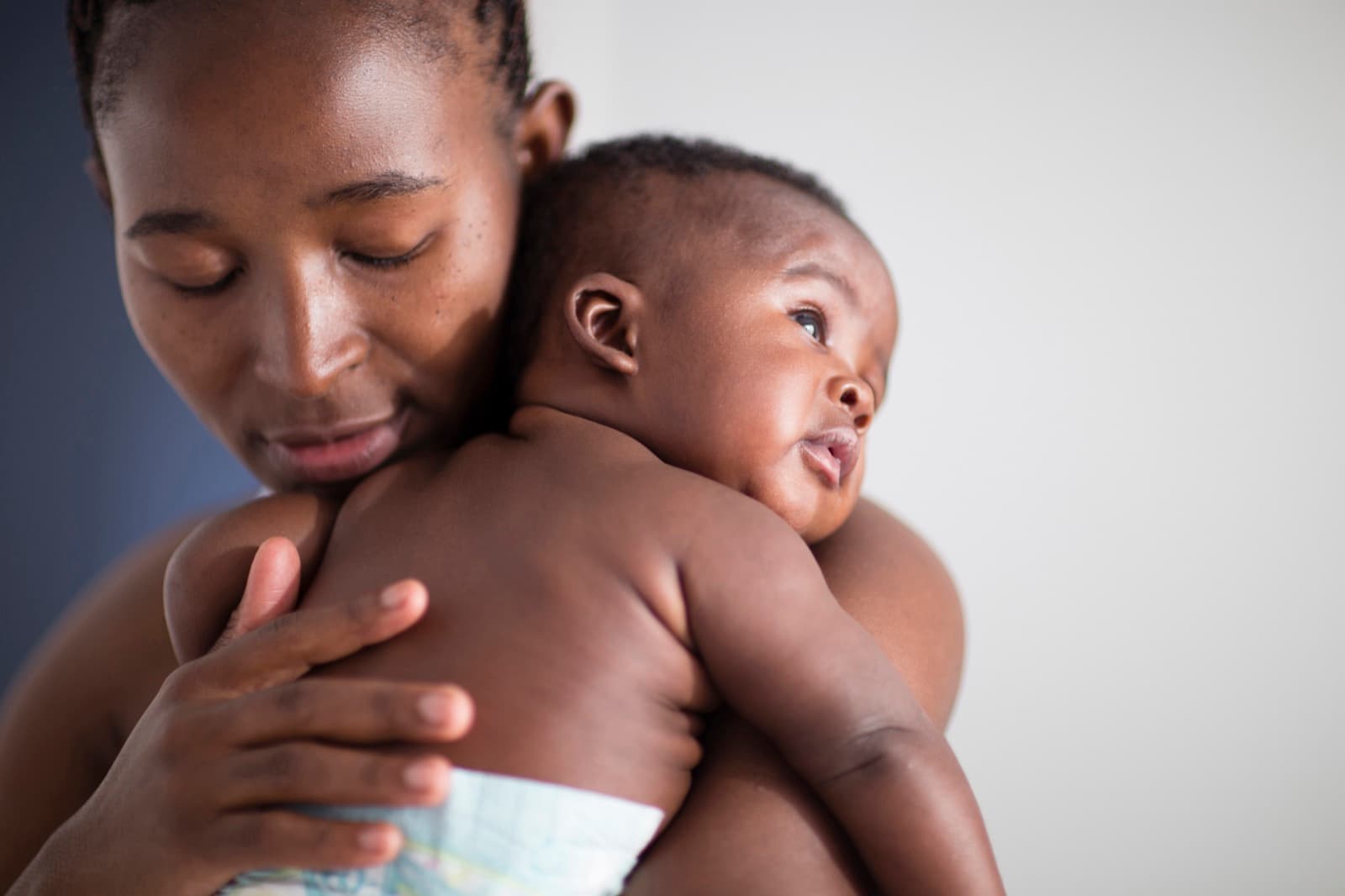
The U.S. has the worst maternal mortality rate of any wealthy country — and it has doubled in the last 40 years. Black women die at nearly three times the rate of white women. The vast majority of these deaths are preventable.
Maternal mortality varies by more than 4× across U.S. states. Tap or hover any state for its rate, the U.S. comparison, and the country with the closest national rate.
The same gaps in care that kill almost 900 U.S. mothers a year also drive 41,000 stillbirths and infant deaths, 60,000 near-fatal complications, 430,000 babies needing intensive medical care, 720,000 mothers in mental-health crisis, and 1.2 million mothers left with lasting physical effects. The harm runs much deeper than the deaths.
Today, there are life-threatening gaps in care — before, during, and after pregnancy. We're closing these gaps by uniting leaders and families around a state-led playbook to scale proven solutions across the country.
These deaths come from a wide range of conditions — no single dominant cause. The common thread is that the vast majority are preventable per CDC Maternal Mortality Review Committees.
Research, partnerships, and policy work — building the case and the coalition to cut U.S. maternal mortality in half.
A new HMHBA white paper from economist Emily Oster and Rebecca Jack finds mothers absorb the heaviest burden of inadequate parental leave, while employers in Arkansas, Illinois, Mississippi, and Nebraska find paid leave far more affordable than they expected.
Read more ↗The full HMHBA white paper by Emily Oster and Rebecca Jack: what 1,003 employers and 2,002 parents in Arkansas, Illinois, Mississippi, and Nebraska told us about the real cost of paid parental leave, who bears the burden when it's missing, and what employers and states can do.
Read more ↗New Aaru research for HMHBA finds 75% support state funding to train more midwives, especially in rural areas, and 73% support making midwife care easier to access under state law.
Read more ↗An Aaru Lumen survey for HMHBA finds 63% of respondents favorable toward midwives, comfort rising from 51% to 64% once they learn about licensing and certification, and roughly three in four backing policies to expand midwifery care.
Read more ↗HMHBA announced $20 million in catalytic funding for maternal health in Arkansas and Kentucky, its first state-level investments toward cutting the U.S. maternal death rate in half in five years. Founder Olivia Walton made the announcement onstage at the Heartland Summit with Governors Sarah Huckabee Sanders and Andy Beshear. Each state will receive $10 million over five years.
Read more ↗A new national survey of 1,000 voters finds 86% of Americans say mothers should not be dying from preventable causes in childbirth, and all 15 policy solutions tested won majority support. Olivia Walton and Kellyanne Conway call on the Senate to pass the Rural Obstetrics Readiness Act and the NIH IMPROVE Act.
Read more ↗Healthy Moms, Healthy Babies America is a national, bipartisan campaign for building awareness, creating urgency, and turning proven maternal-health solutions into practice at scale.
With a five-year goal of cutting U.S. maternal deaths in half, we work to make maternal health a national priority while partnering state by state to connect evidence, policy, public and private capital, health systems, employers, and community organizations — and help translate that momentum into changes in how care is delivered before, during, and after pregnancy.
Our role is to accelerate and strengthen the work of the maternal health field, not duplicate it. We elevate the issue and the solutions that already exist; help build public and political will for change; and use catalytic investment, partnerships, and implementation support to help proven approaches reach more families.

By aligning policy design with employer incentives and community infrastructure, policymakers can advance a model that strengthens families, supports businesses and promotes long-term economic stability.
Maternal health shapes your workforce, your healthcare spend, and the communities you operate in. We translate the data into business cases and partnerships that move investment where it matters most.
By shifting from siloed OB-GYN care to a broader suite of maternal health providers, prenatal services become more accessible, with extended insurance coverage, and aligned with women’s needs throughout pregnancy and postpartum.
Preventing maternal death takes a coalition. These organizations are leading the research, advocacy, and direct support that save lives every day. We’re proud to share their work with our community — and encourage those who can to support them through donations and advocacy.

Advances safe, respectful, and equitable maternal health care through awareness raising, community-led grantmaking, and systems-change advocacy. Founded by Christy Turlington Burns.
Visit →
Fights the U.S. maternal mortality crisis through crisis response for affected families, public education, and legislative advocacy. Founded by Charles Johnson IV in honor of his wife Kira Dixon Johnson.
Visit →
Offers postpartum nurse home visits to all families with newborns, providing health assessments, guidance, and community connections at no cost to parents so every family has the strongest start possible.
Visit →
Provides need-based grants covering midwifery and holistic perinatal care for families who would otherwise lack access. Founded by Elaine Welteroth.
Visit →
Works to end preventable maternal death, preterm birth, and infant mortality through research funding, education, advocacy, and direct family support.
Visit →
Unites mothers across America to win paid family and medical leave, affordable, accessible childcare, and improved maternal health outcomes through nonpartisan advocacy and a grassroots network of 50+ local chapters.
Visit →
Sign up for regular updates, ways to take action, and a state-by-state look at progress.